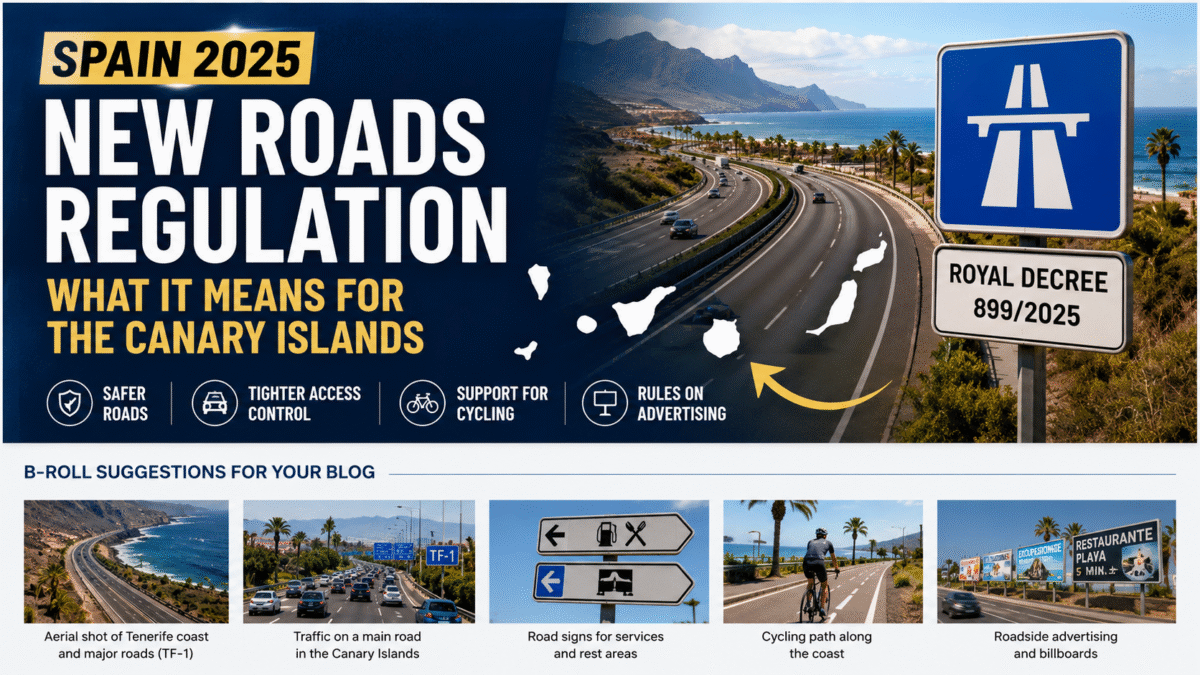
The new rules modernise how Spain manages roads, road safety, urban development near highways, roadside advertising, service areas, and access to major roads.
The regulation places a strong emphasis on:
- Road safety
- Controlling road access
- Sustainable mobility
- Protecting strategic transport corridors
- Cycling infrastructure
- Coordination between national, regional, and local authorities
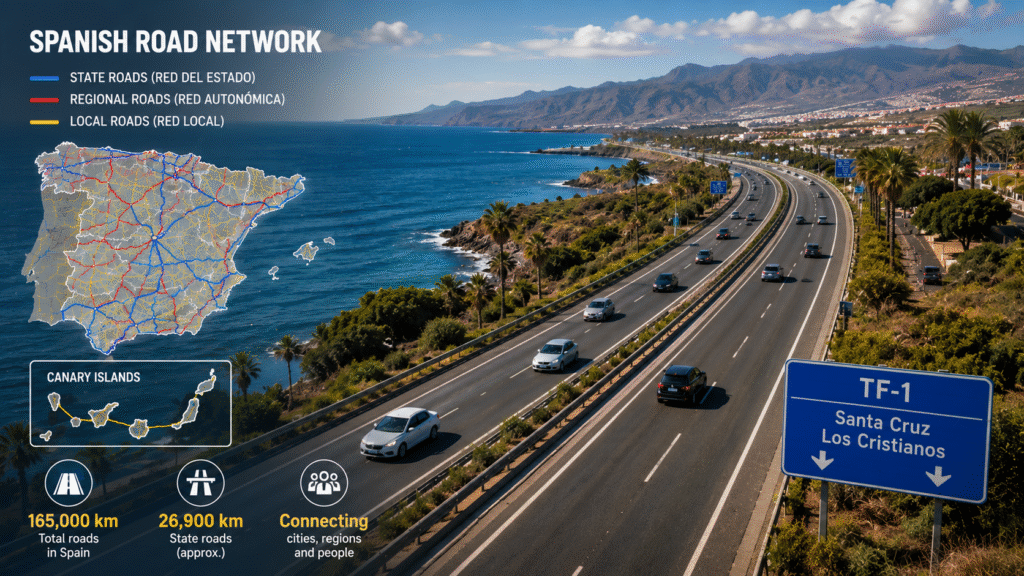
Although many of the rules apply primarily to the mainland’s State Road Network, there are still important implications for the Canary Islands.
Why Spain Changed the Rules
The Spanish government says the old framework no longer reflected modern transport realities.
The new regulation is designed to:
- Reduce accidents
- Improve traffic flow
- Prevent uncontrolled urban sprawl around roads
- Protect long-distance transport routes
- Improve coordination between administrations
- Encourage sustainable transport methods like cycling
A major theme throughout the regulation is the idea that long-distance roads should remain focused on moving traffic efficiently rather than becoming overloaded with local access points and commercial developments. oai_citation:1‡BOE-A-2025-20206-consolidado.pdf
Key Changes Explained
Tougher Control of Road Access
One of the biggest changes is tighter control over new road connections and entrances onto major roads.
The regulation states that every additional access point creates a potential safety risk. New access points or changes of use for existing accesses will only be approved if they improve network connectivity and do not damage traffic flow or road safety. oai_citation:2‡BOE-A-2025-20206-consolidado.pdf
This could affect:
- New commercial developments
- Retail parks
- Fuel stations
- Tourist facilities
- Housing developments near major roads
Developers may now need detailed traffic studies before receiving approval.
Stronger Rules for Urban Development
The regulation gives the Directorate General of Roads stronger powers to review urban planning projects that could impact major roads.
Large developments — including renewable energy projects, housing projects, industrial zones, or tourism developments — may face additional scrutiny if they could increase traffic levels or interfere with future road plans. oai_citation:3‡BOE-A-2025-20206-consolidado.pdf
Developers may also be required to fund road improvements needed because of their projects.
Crackdown on Roadside Advertising
Spain is reinforcing restrictions on roadside advertising visible from major roads.
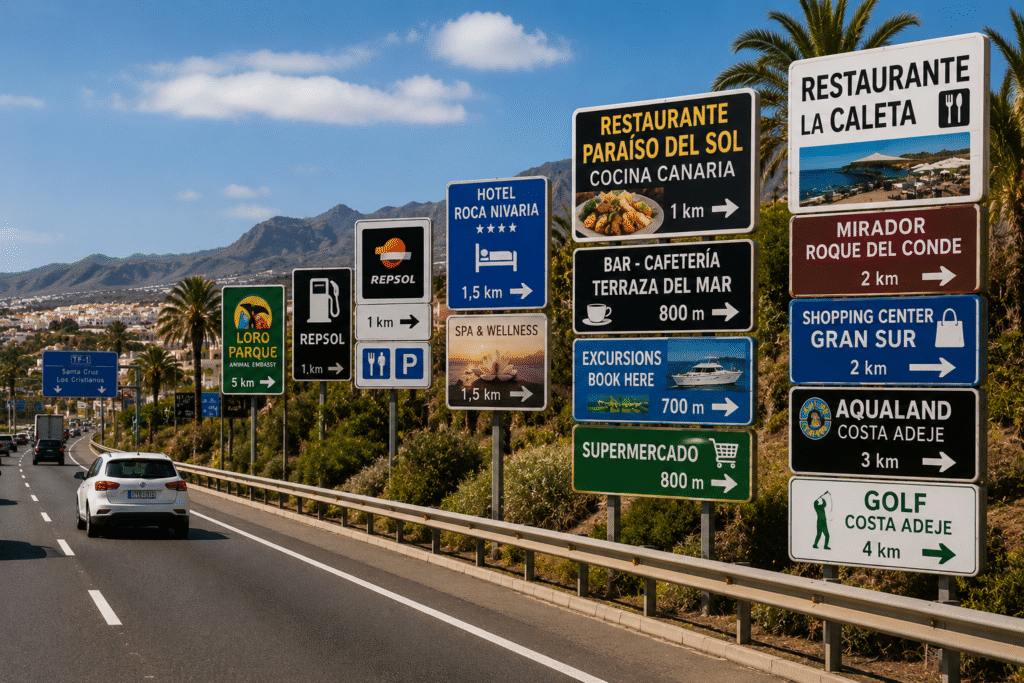
Businesses using roadside signs may need to update or remove them if they are considered distracting or dangerous for drivers. Existing signs that fail to comply must be adapted within 12 months of the regulation entering into force. oai_citation:4‡BOE-A-2025-20206-consolidado.pdf
This could affect:
- Restaurants
- Tourist attractions
- Bars
- Retail parks
- Hotels
- Excursion companies
especially those relying on roadside visibility.
More Focus on Cycling Infrastructure
The regulation formally recognises the growing importance of cycling and sustainable mobility.
It specifically references Spain’s national bicycle strategy and says cycling routes should be safe, continuous, and coordinated between administrations. oai_citation:5‡BOE-A-2025-20206-consolidado.pdf
This may encourage further investment in:
- Coastal cycling paths
- Urban cycling lanes
- Tourist cycling infrastructure
- Interurban bike routes
including in tourist regions such as Tenerife.
New Rules Around Service Areas and Rest Stops
The regulation modernises rules governing:
- Service stations
- Rest areas
- Safe parking areas
- Third-party operated motorway services
The government wants to improve facilities for both ordinary drivers and freight transport.
Does This Affect the Canary Islands?
Yes — but differently from mainland Spain.
The Canary Islands do not form part of the mainland State Road Network in the same way as peninsular Spain. Most roads in the islands are managed by the Cabildos and regional authorities rather than Madrid.
However, the regulation can still influence the Canary Islands in several important ways:
Urban Planning and Tourism Projects
Large developments near major island roads could face stricter transport and traffic impact analysis.
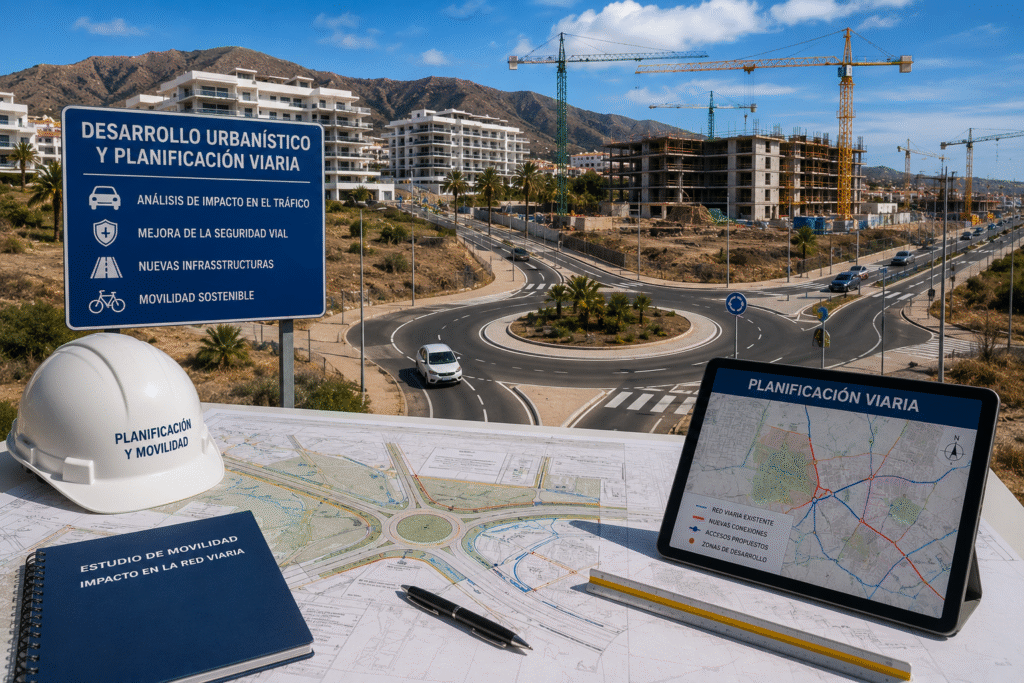
This is especially relevant in high-growth tourist areas such as:
- Costa Adeje
- Los Cristianos
- Playa de las Américas
- La Caleta
- Puerto de la Cruz
Authorities may increasingly require developers to prove that new projects will not overload local roads.
Cycling and Sustainable Mobility
The Canary Islands have been investing heavily in cycling infrastructure and low-emission mobility projects.
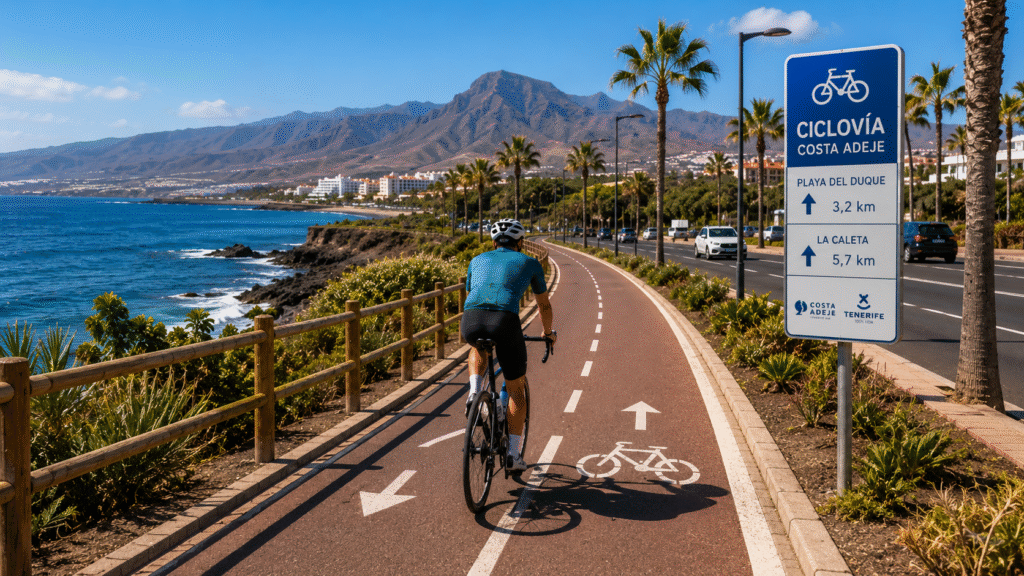
This regulation strengthens national support for:
- Safer cycling corridors
- Integrated transport planning
- Sustainable tourism mobility
which could benefit future Tenerife cycling projects.
Roadside Businesses and Advertising
Tourism businesses using roadside advertising may need to review whether signs comply with updated visibility and safety requirements.
This could eventually affect:
- Excursion companies
- Restaurants
- Tourist attractions
- Bars and beach clubs
- Commercial signage near TF-1 and other major roads
Traffic Management and Access
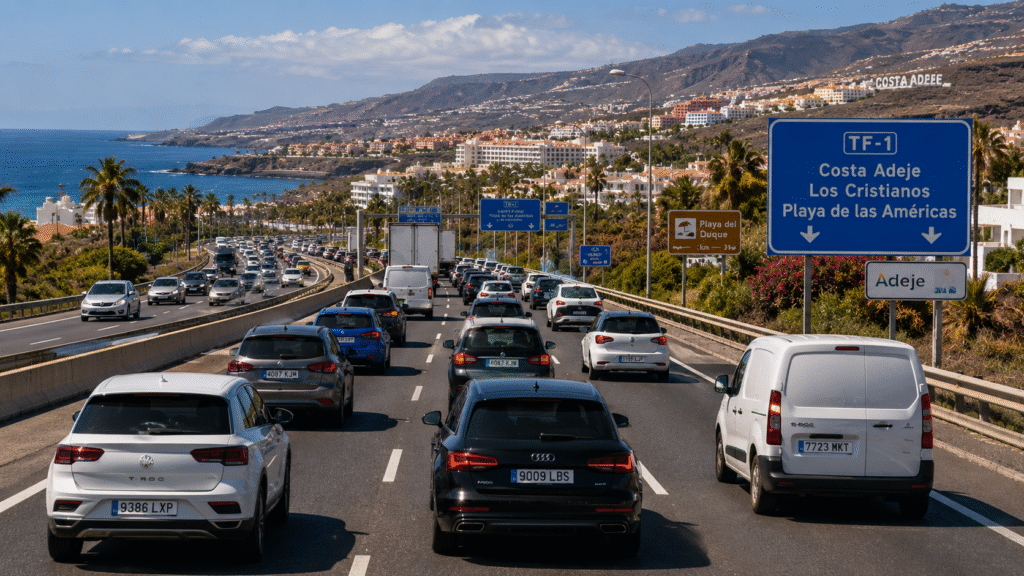
Future developments along major island roads may face stricter rules regarding direct access onto high-capacity roads such as the TF-1.
Authorities may push for better distribution roads and fewer direct connections to improve traffic safety and reduce congestion.
The Bigger Picture
This regulation reflects a broader shift happening across Spain and Europe:
- Safer roads
- More sustainable transport
- Reduced roadside clutter
- Better long-term infrastructure planning
- Greater protection of strategic transport corridors
For residents and visitors, many of the changes may remain largely invisible in day-to-day life.
But for developers, councils, tourism operators, and businesses located near major roads, the impact could become significant over the coming years.
Source
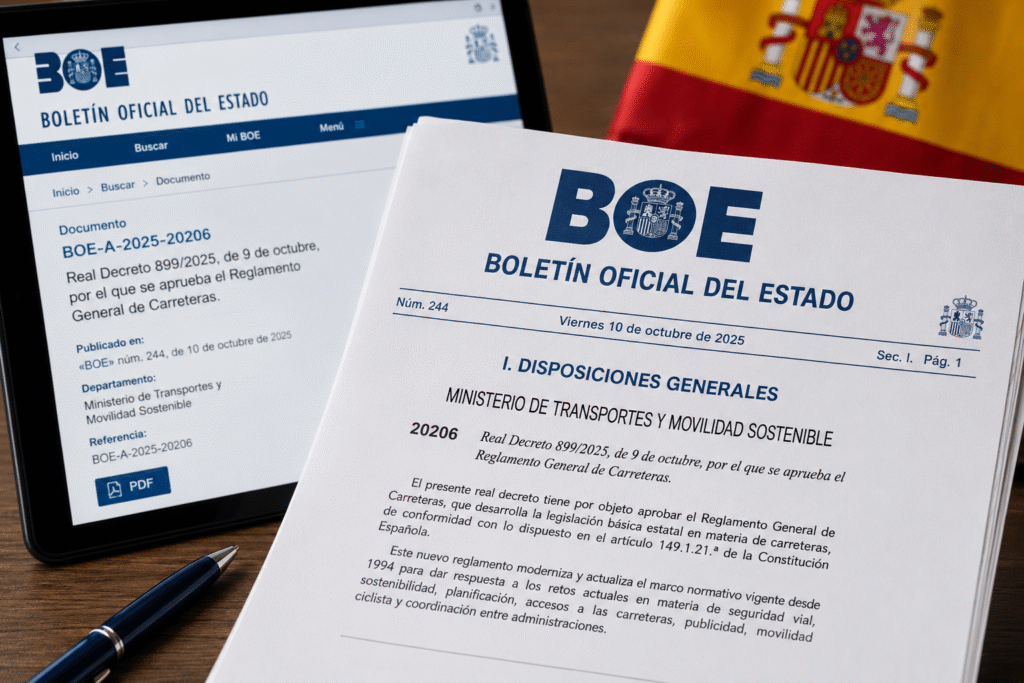
Spanish Official State Gazette (BOE) – Royal Decree 899/2025 approving the General Roads Regulation. oai_citation:6‡BOE-A-2025-20206-consolidado.pdf