Summary
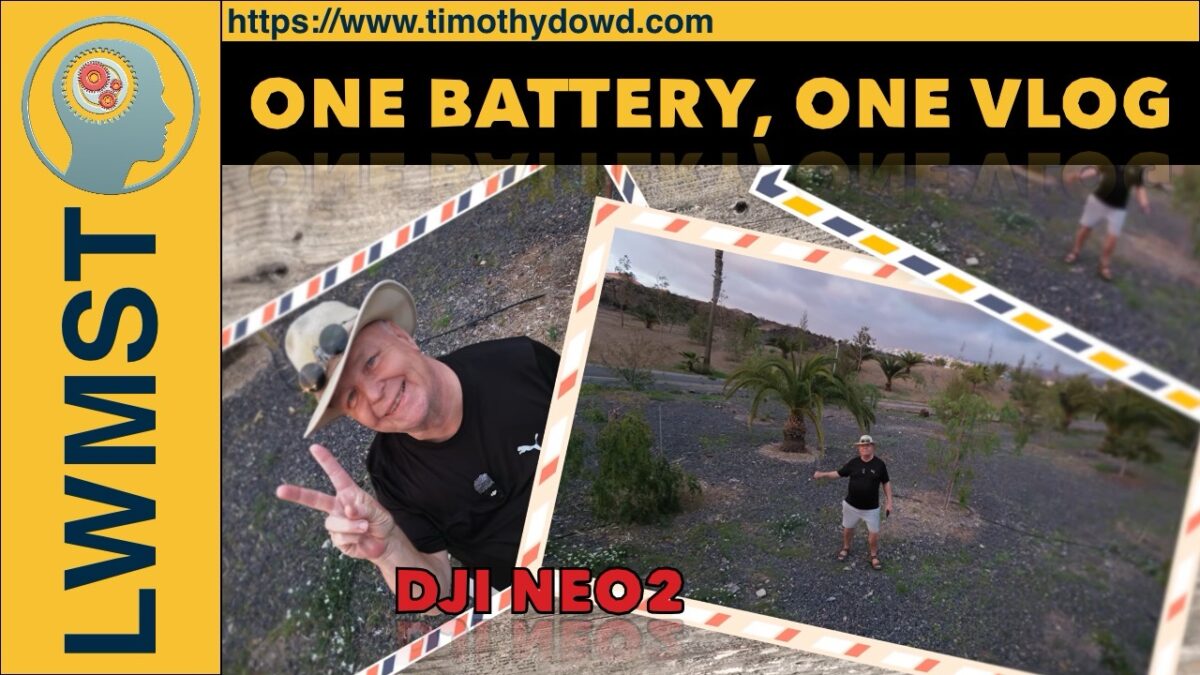
This episode puts the DJI Neo 2 through a simple but revealing challenge: how much content can you realistically capture using just one battery? From follow mode to master shots, the drone is tested in everyday conditions with obstacles, fading light, and changing terrain.
What we talked about
- Filming a complete vlog on a single drone battery
- Follow mode from different angles
- Spotlight mode and hand-gesture controls
- Using the drone as a handheld camera
- Automated master shots and helix moves
- Battery life in real-world conditions
Key takeaways
- One battery is enough for a surprisingly complete vlog
- Follow and spotlight modes work well but need awareness
- Gesture controls are powerful but easy to trigger accidentally
- Automated shots save effort but need clear space
- Battery life drops quickly as light fades and wind picks up
Notable moments
- Testing follow mode around trees and obstacles (00:19)
- Discovering how spotlight mode reacts to hand gestures (02:16)
- Using the drone as a static handheld camera (04:00)
- Master shots success despite tight surroundings (06:50)
- Following uphill until the battery finally runs out (09:40)
Full write-up
The idea behind this video was simple: take one drone battery and see how much real, usable footage it can produce without stopping or swapping anything out. From the start, the focus was on practicality rather than perfection.
Follow mode was the first real test, with the drone tracking from the front, side, and rear while navigating trees, posts, and uneven ground. It handled obstacles better than expected, though it quickly became clear that positioning and awareness matter.
Spotlight mode introduced gesture controls, which turned out to be both clever and risky. Holding a hand up can instantly change behaviour — or even stop recording entirely — so learning what not to do is just as important as knowing the features.
Manual mode showed another strength: the drone can double as a simple handheld camera without even flying. Selfie shots and thumbnails came next, producing multiple angles in seconds with minimal effort.
Automated master shots, helix, and dolly zooms rounded out the test. Despite fading light, wind, and tight surroundings, the drone managed to complete the moves cleanly. The final stretch followed a walk uphill until the battery finally gave out, proving that even with limitations, a single battery can go a long way if used smartly.
Overall, this was less about cinematic perfection and more about understanding what’s realistically possible when you just press record and go.
