Summary
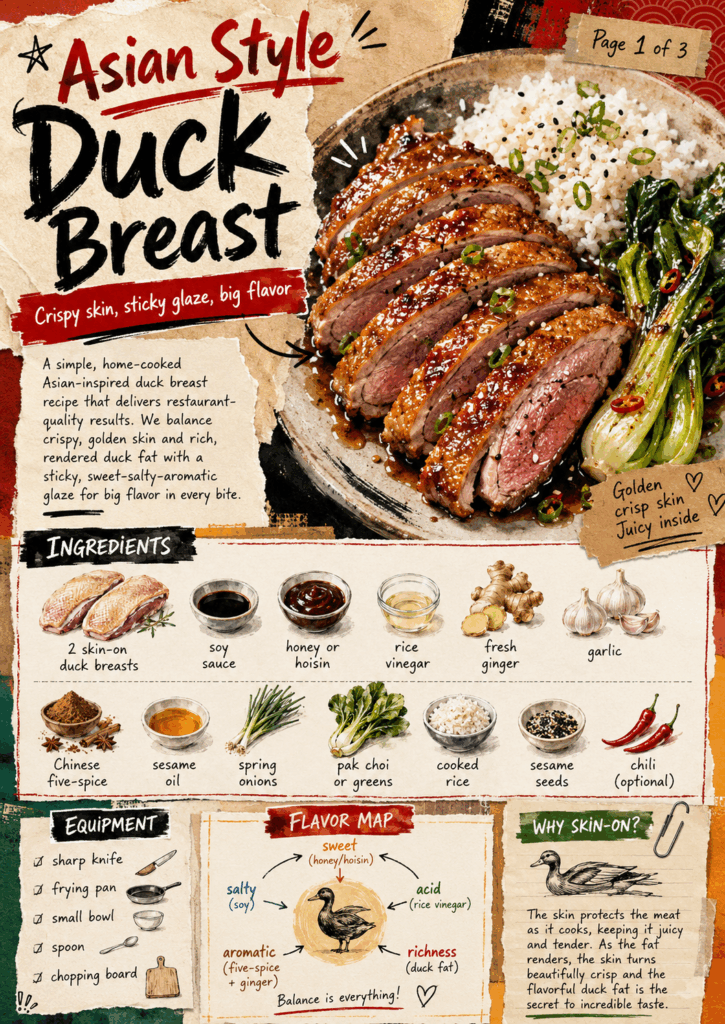
This is a simple Asian-style duck breast recipe using skin-on duck breast, a sticky soy-based glaze, and easy sides like rice and greens.
The main trick is starting the duck skin-side down in a cold pan. That gives the fat time to render slowly, which helps the skin go crisp without burning. Once the skin is golden, the duck only needs a short finish on the flesh side, then a little glaze and a good rest before slicing.
It feels a bit special, but it is still very doable at home.
Ingredients
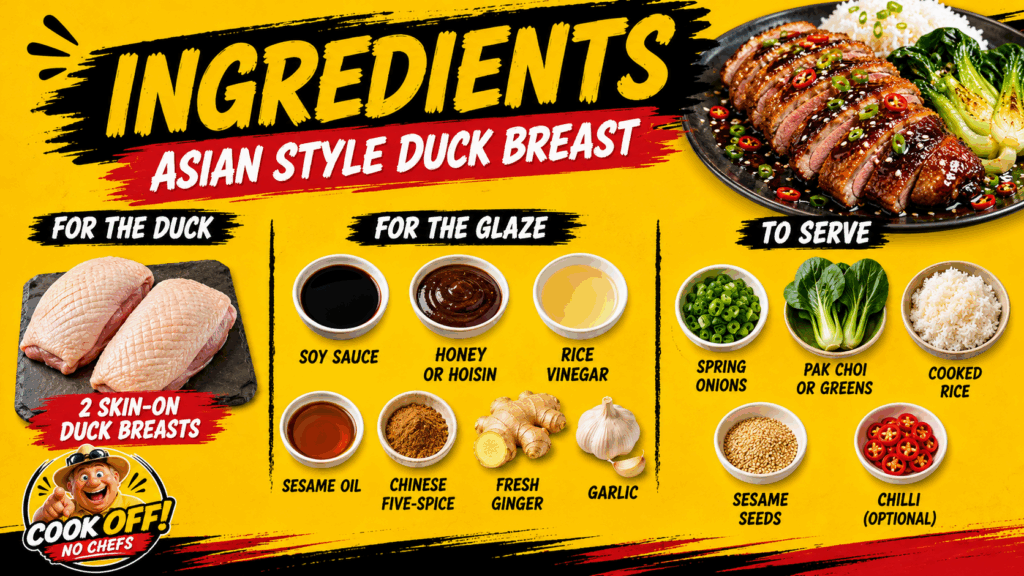
- 1 or 2 skin-on duck breasts
- Soy sauce
- Honey or hoisin sauce
- Rice vinegar
- Fresh ginger
- Garlic
- Chinese five-spice
- A few drops of sesame oil
- Spring onions
- Pak choi, greens, or vegetables of choice
- Cooked rice or noodles
- Sesame seeds
- Fresh chilli, optional
For the glaze, a simple starting point is:
- 2 tablespoons soy sauce
- 1 tablespoon honey or hoisin
- 1 teaspoon rice vinegar
- 1 small piece of grated ginger
- 1 clove garlic, grated or finely chopped
- A pinch of Chinese five-spice
- A few drops of sesame oil
What I Did (Step-by-Step)
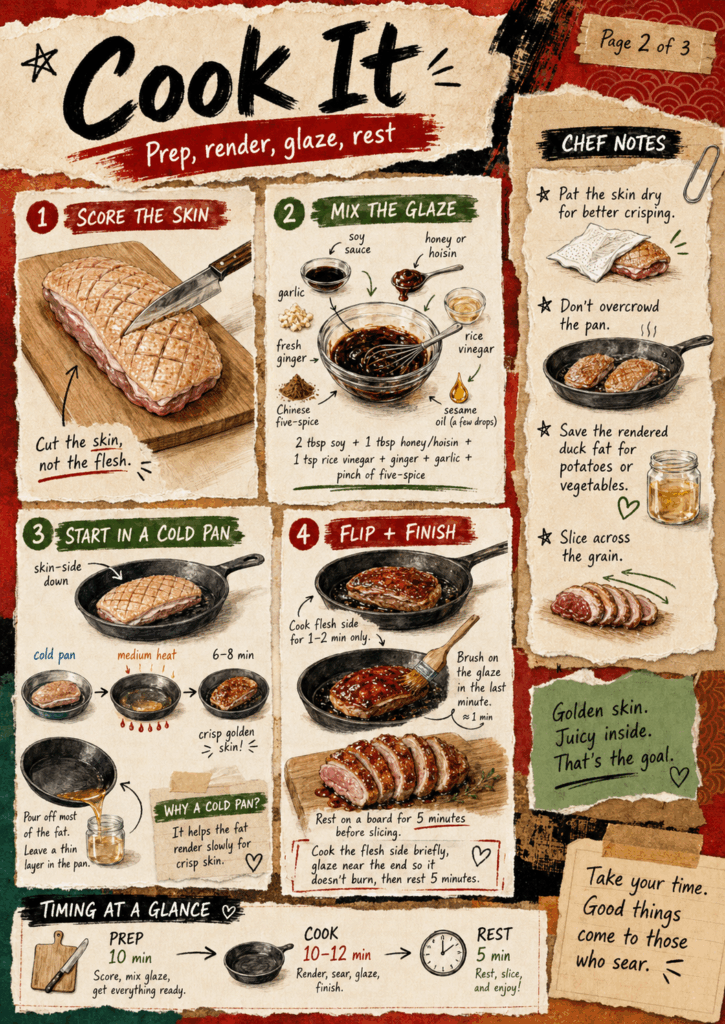
1. Dry the duck skin
First, pat the duck breast dry with kitchen paper.
This sounds boring, but it matters. If the skin is wet, it will steam before it crisps. Dry skin gives you a much better chance of getting that golden, crackly finish.
2. Score the skin
Score the skin in a criss-cross pattern using a sharp knife.
The important bit is to cut through the skin and fat, but not deep into the meat. You are giving the fat somewhere to render out, not slicing the duck breast apart.

3. Mix the glaze
In a small bowl, mix soy sauce, honey or hoisin, rice vinegar, ginger, garlic, Chinese five-spice, and a few drops of sesame oil.
Taste it if you like. You want salty, sweet, sharp, and aromatic all working together.
A simple variation:
If you want it sweeter, use honey.
If you want it deeper and more savoury, use hoisin.

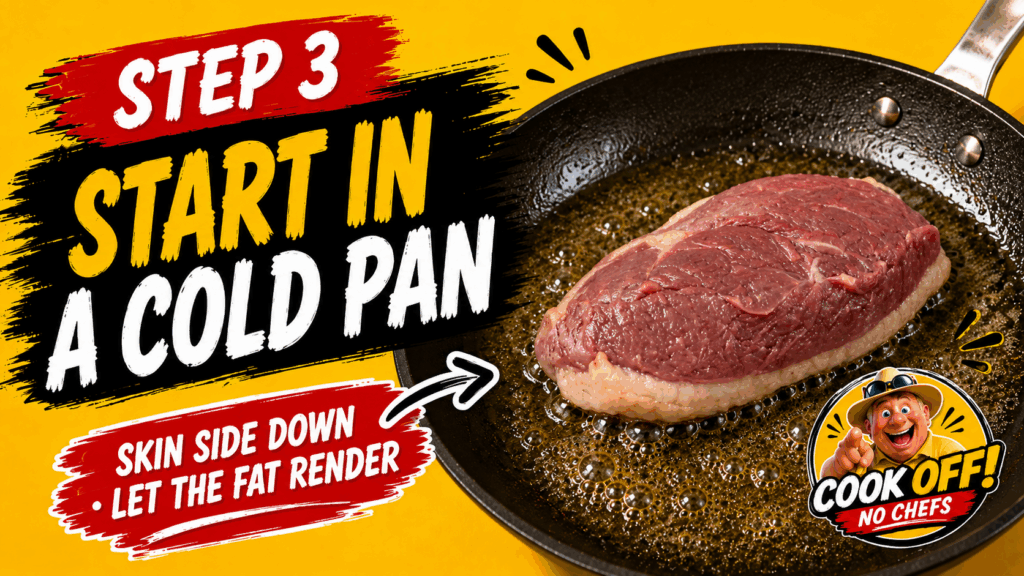
4. Start the duck in a cold pan
Put the duck breast skin-side down into a cold frying pan.
Then turn the heat to medium. As the pan heats up, the fat slowly renders out and the skin starts to crisp.
This usually takes around 6 to 8 minutes, but use your eyes more than the clock. You want the skin golden and crisp, not blackened.
5. Pour off some of the fat
As the duck cooks, quite a bit of fat will come out.
Carefully pour most of it into a small bowl or jar, leaving a thin layer in the pan. Do not throw it away. Duck fat is brilliant for potatoes, fried rice, roasted vegetables, or even frying the greens.
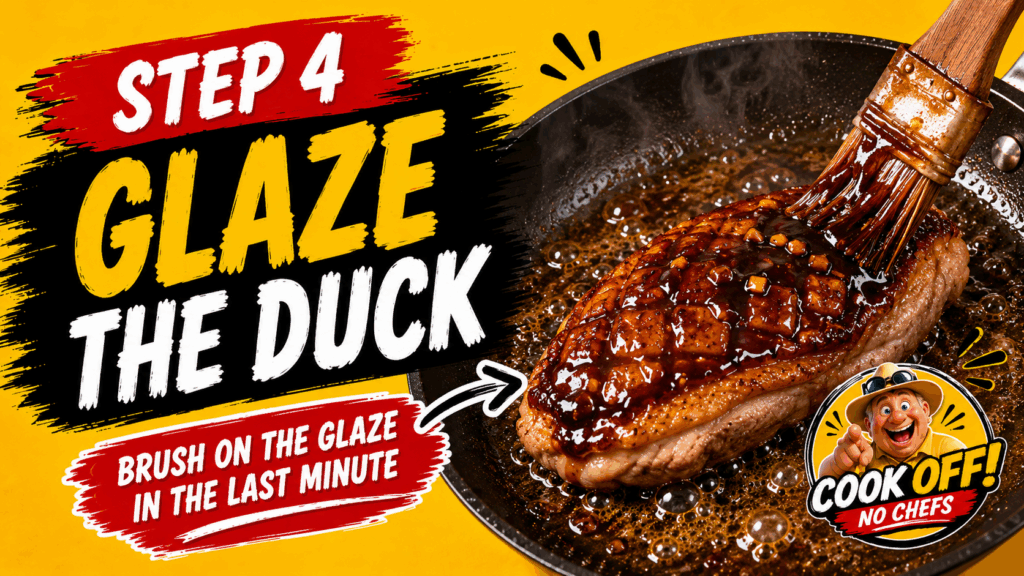
6. Flip and finish
Once the skin is crisp, flip the duck breast over and cook the flesh side briefly.
It usually only needs a minute or two, depending on the size of the breast and how pink you like it. Brush or spoon on the glaze near the end so it gets sticky without burning.
7. Rest before slicing
Take the duck out of the pan and let it rest on a board for about 5 minutes.
This helps the juices settle. If you slice it straight away, you lose more juice onto the board.
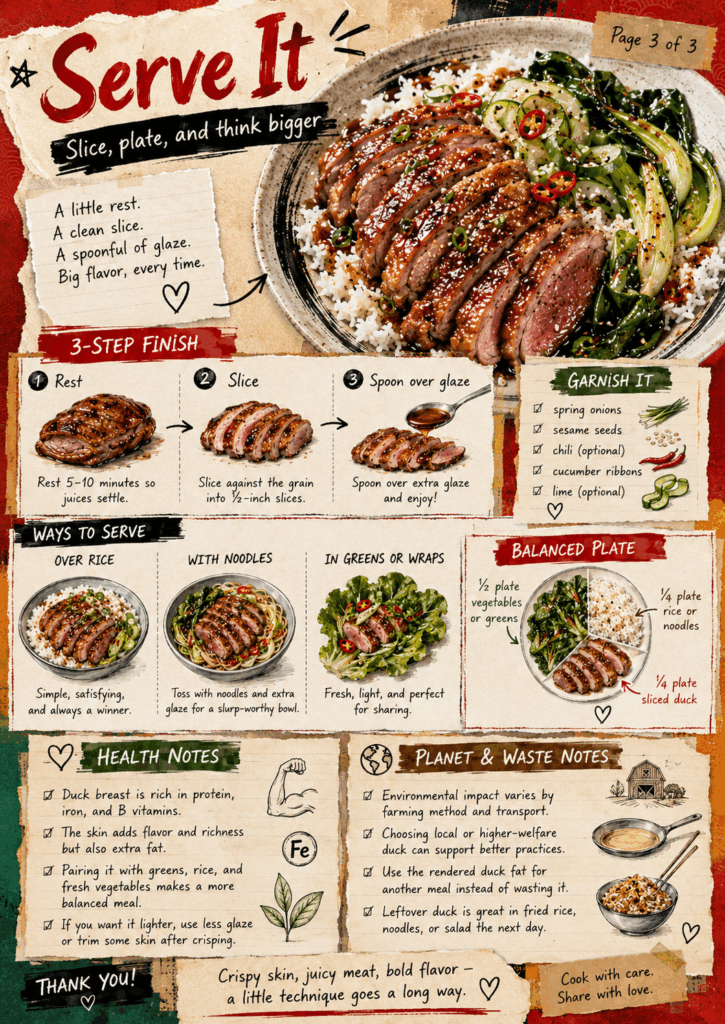
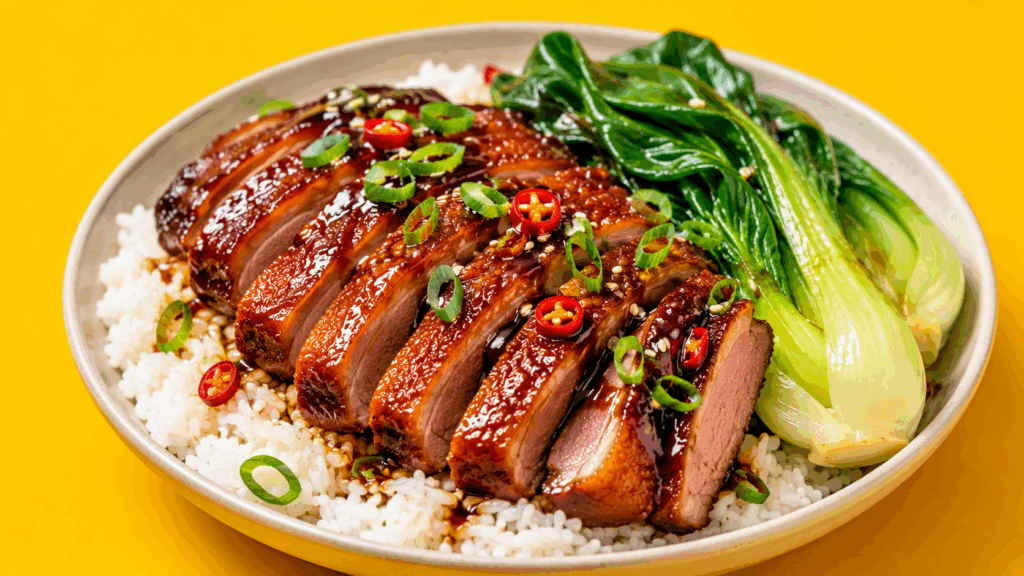
8. Slice and serve
Slice the duck across the grain into neat pieces.
Serve it over rice or noodles with greens, then spoon over a little extra glaze. Finish with spring onions, sesame seeds, chilli, cucumber ribbons, or a squeeze of lime if you have it.
Key Takeaways
- Dry skin crisps better.
- Start in a cold pan so the fat renders slowly.
- Do not rush the skin side.
- Glaze near the end so the sugar does not burn.
- Rest the duck before slicing.
- Save the rendered duck fat — it is too good to waste.
A small thing that makes a big difference: slice the duck neatly and spoon the glaze over at the end. It suddenly looks like something from a restaurant, even though the method is very simple.
Health & Environmental Notes
Duck breast is rich in protein and contains useful nutrients like iron and B vitamins.
The skin is where a lot of the flavour is, but it also brings extra fat. That does not mean you have to avoid it — just balance the plate. Serve the duck with plenty of greens, rice, noodles, or fresh vegetables rather than making it all about the meat.
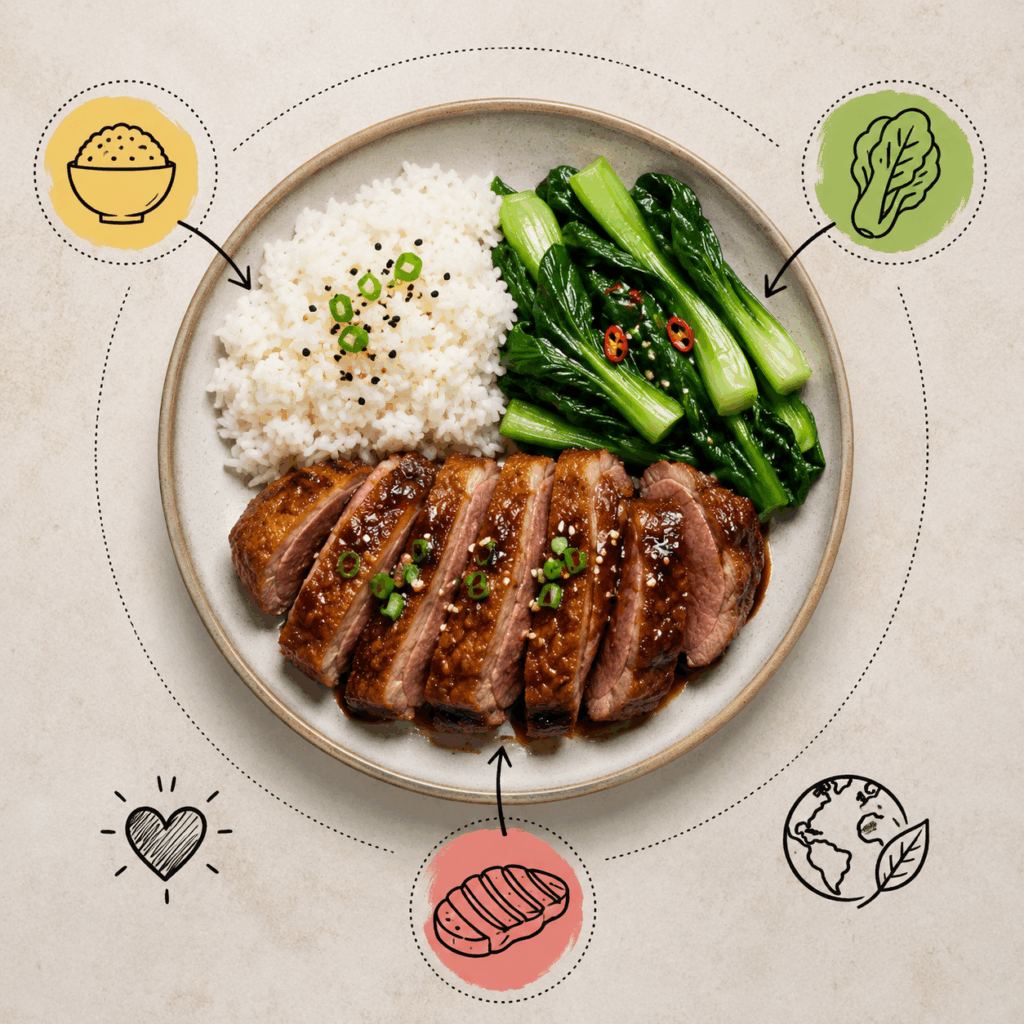
From an environmental point of view, the impact depends on how and where the duck was farmed, how far it travelled, and how much of it you use. Choosing local or higher-welfare duck where possible is a better option.
The big no-waste win here is the rendered duck fat. Keep it and use it for another meal instead of tipping it away. Leftover duck is also great in fried rice, noodle bowls, wraps, or salad the next day.
Final Thoughts
This is one of those recipes where the technique is more important than making it complicated.
Skin-on duck breast can feel a bit intimidating, but once you understand the cold pan method, it becomes much easier. Crisp the skin slowly, glaze it at the end, rest it properly, and slice it nicely.
Crispy skin, juicy meat, sticky glaze — job done.